


01 / 08 The complete casing
Engineering,
layer by layer.
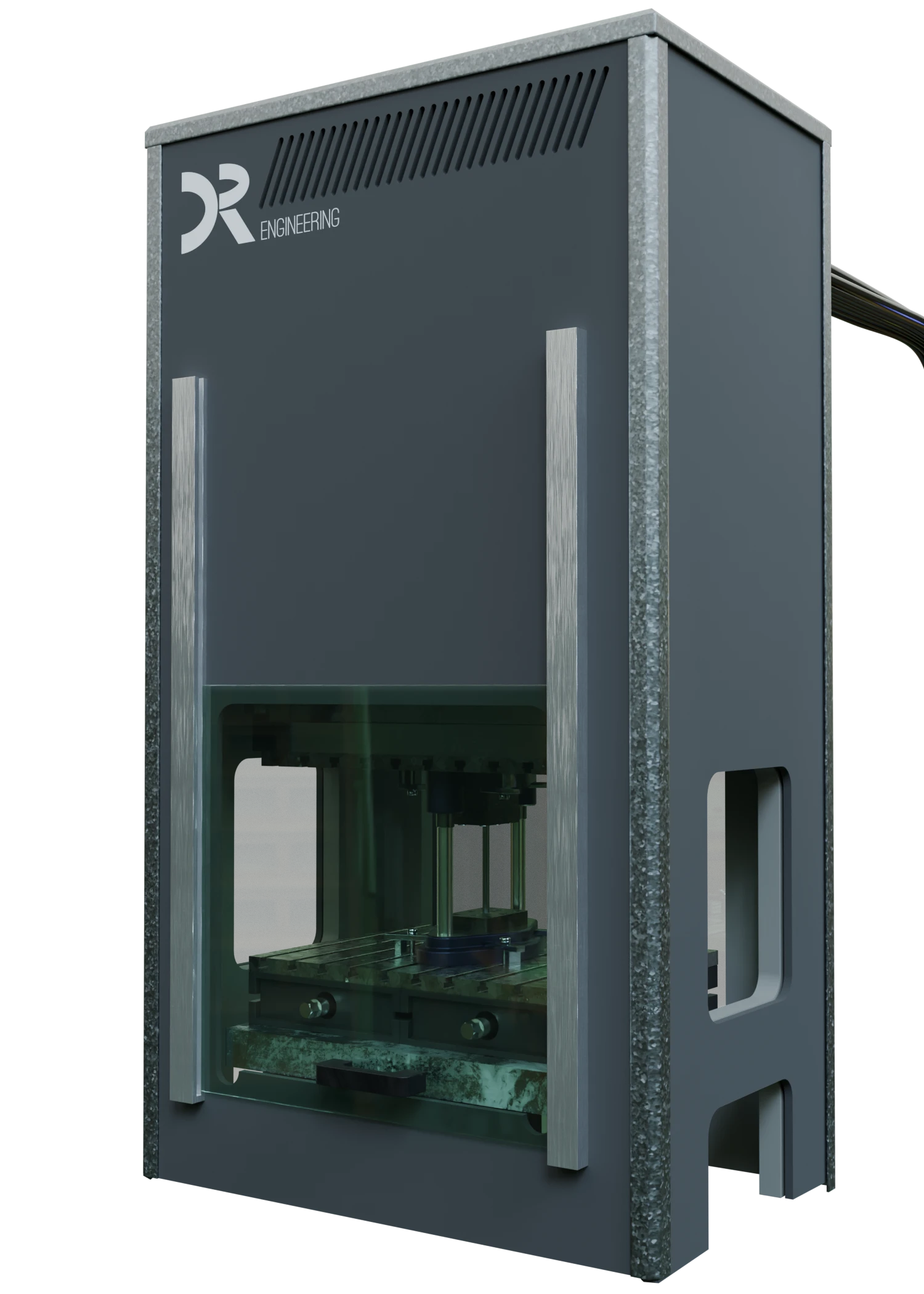
The compact casing encloses a two-stage drive while keeping the tool area visible and accessible. Inside, four linear motors provide the stroke; electromagnets add force near bottom dead centre.
Scroll to explore
02 / 08 Beneath the surface
Internal structure
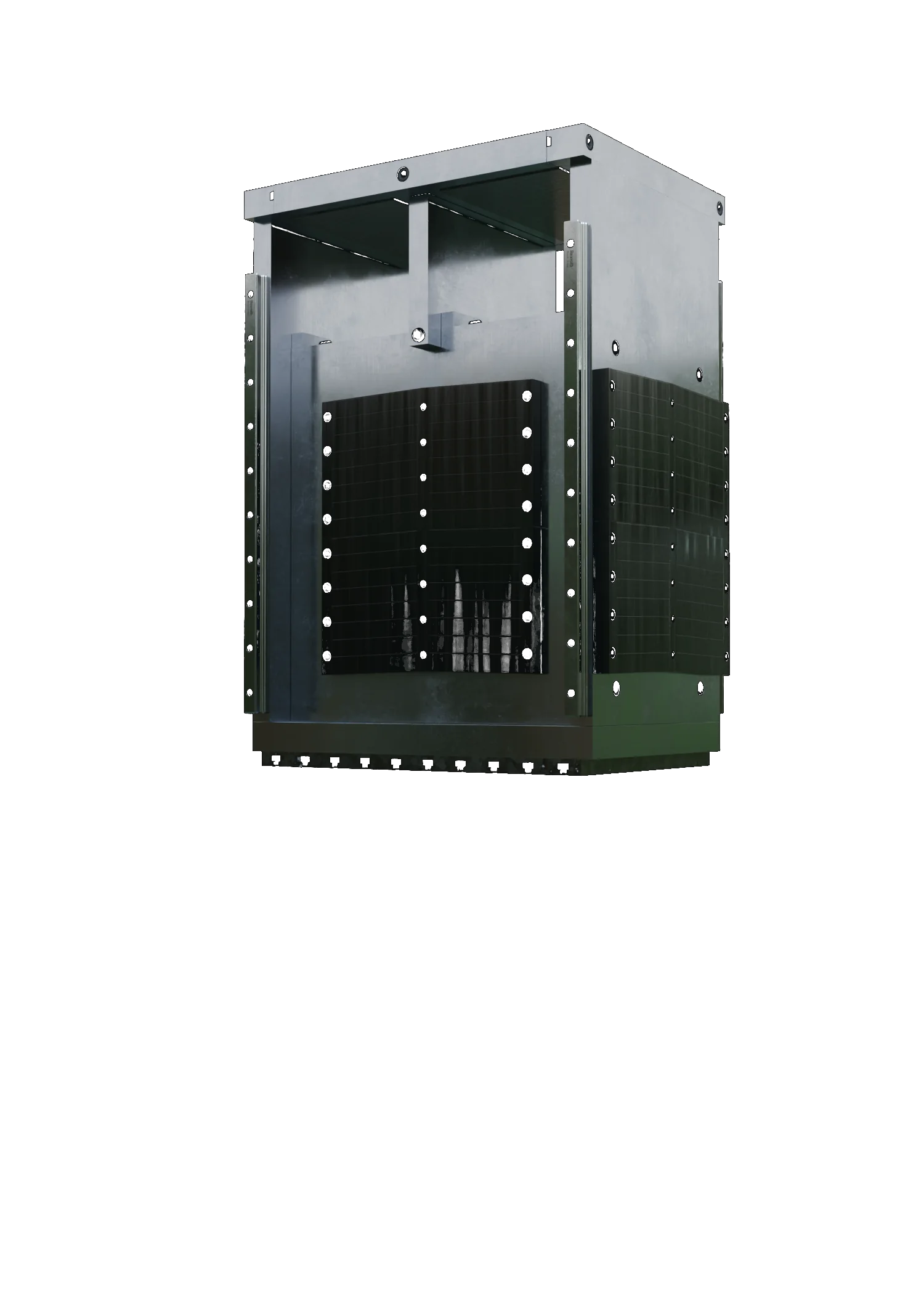
Opening the casing reveals how the four linear motors, upper electromagnets and moving ram fit together. The motors provide travel; the magnets add a timed force pulse near bottom dead centre.
Linear travel and pulsed magnetic force can act in sequence or be synchronized with force and/or position control.
03 / 08 The drive
Four linear motors
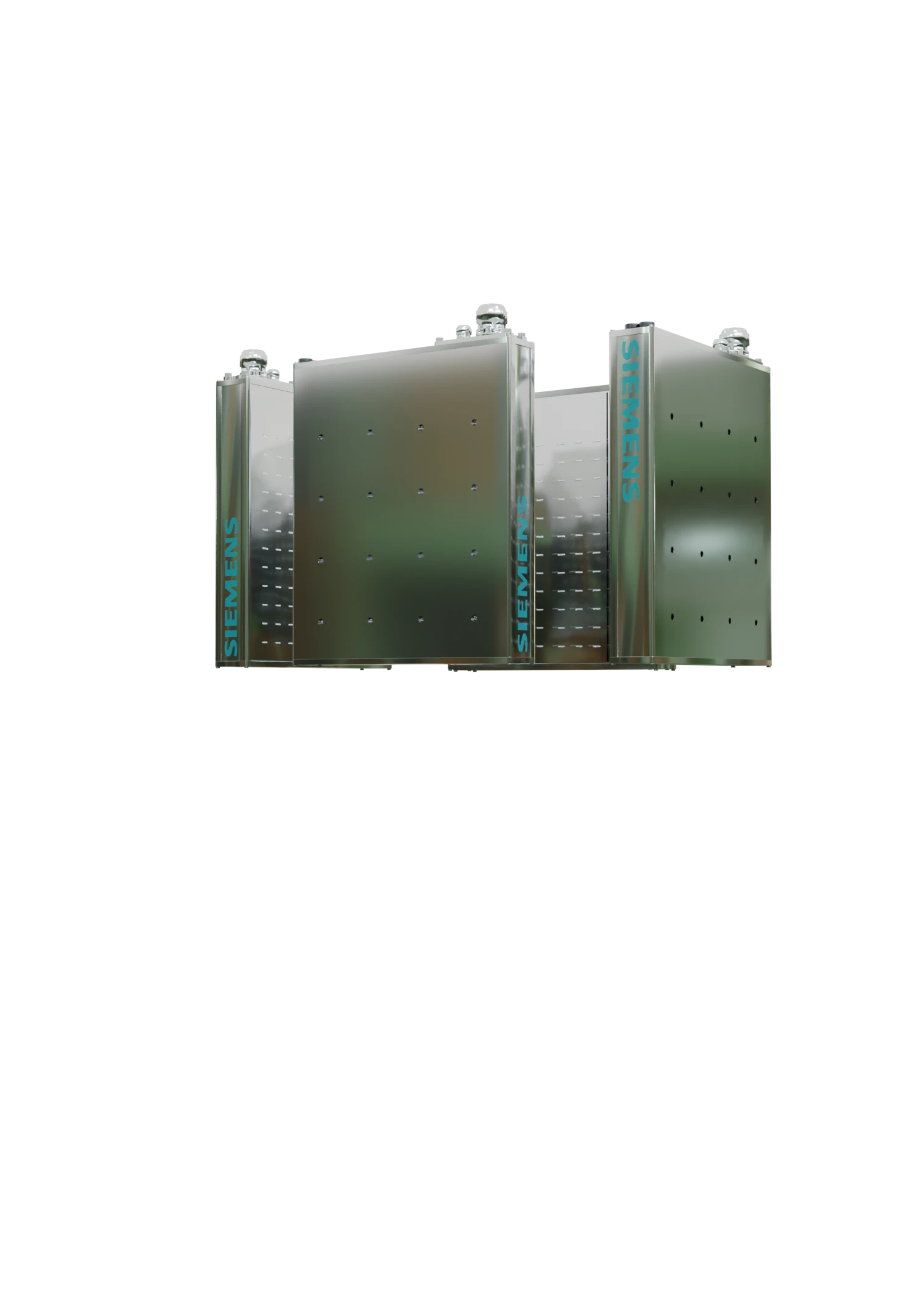
Four linear motors provide the main travel of up to 50 mm, with up to 8.8 kN of force per motor. A longer secondary track could extend the stroke in a revised design.
4 motors · up to 8.8 kN each · up to 50 mm travel
04 / 08 The upper assembly
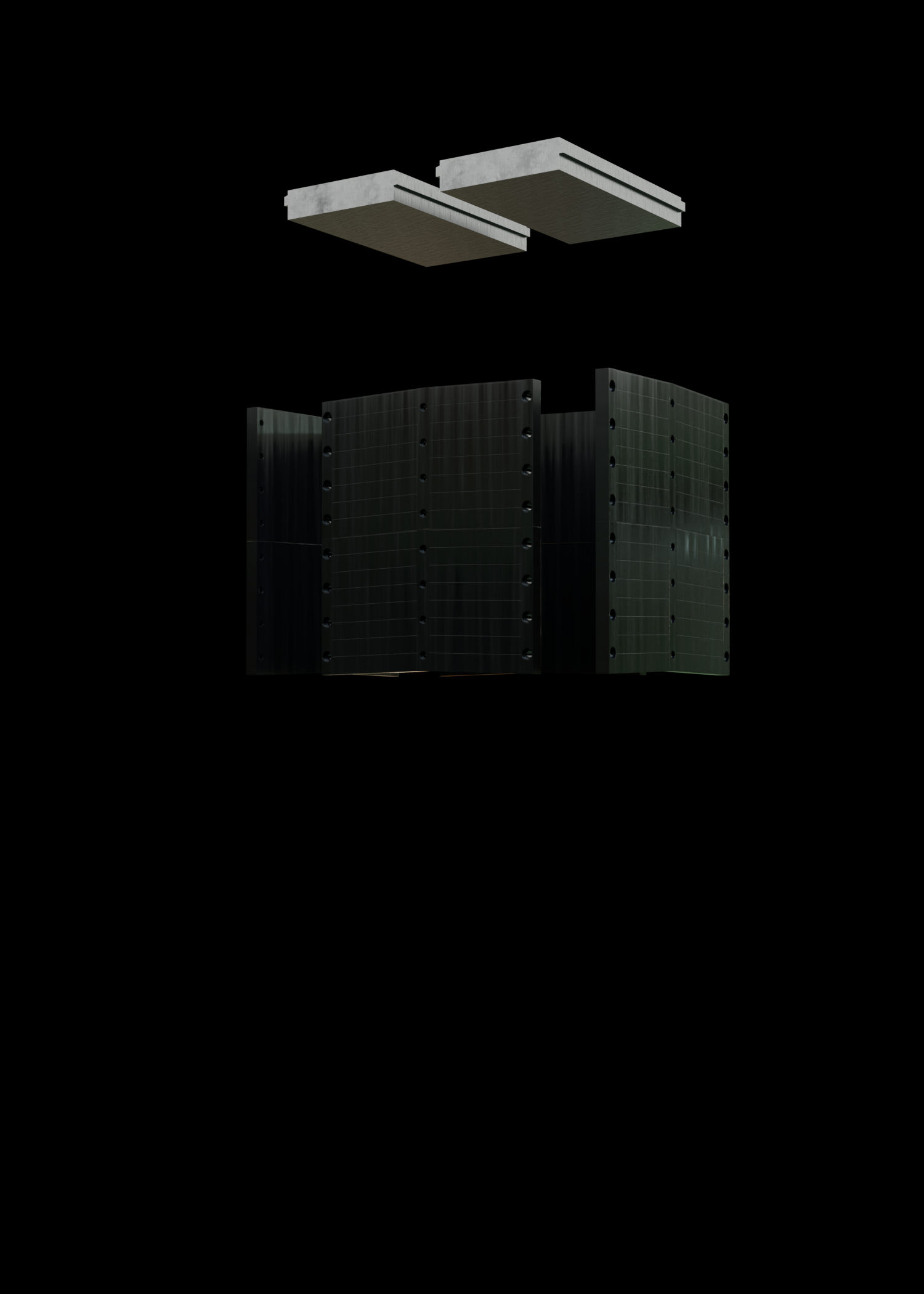
Electromagnets
The isolated upper assembly shows the electromagnets that provide the timed force pulse. Each can supply up to 45 kN at 2.5 mm before bottom dead centre, or up to 60 kN at 1.5 mm. The pulses are synchronized with the machine cycle and individually programmable.
Force buildup takes approximately 10 ms; release is substantially faster.
05 / 08 The moving assembly
Ram structure
A lightweight, rigid ram structure carries the tool and guides the moving assembly. Its open frame gives the motor secondary parts and magnetic armatures a common, precisely aligned carrier.
Low moving mass · rigid load path · guided stroke
06 / 08 Carried by the ram
Passive actuator parts
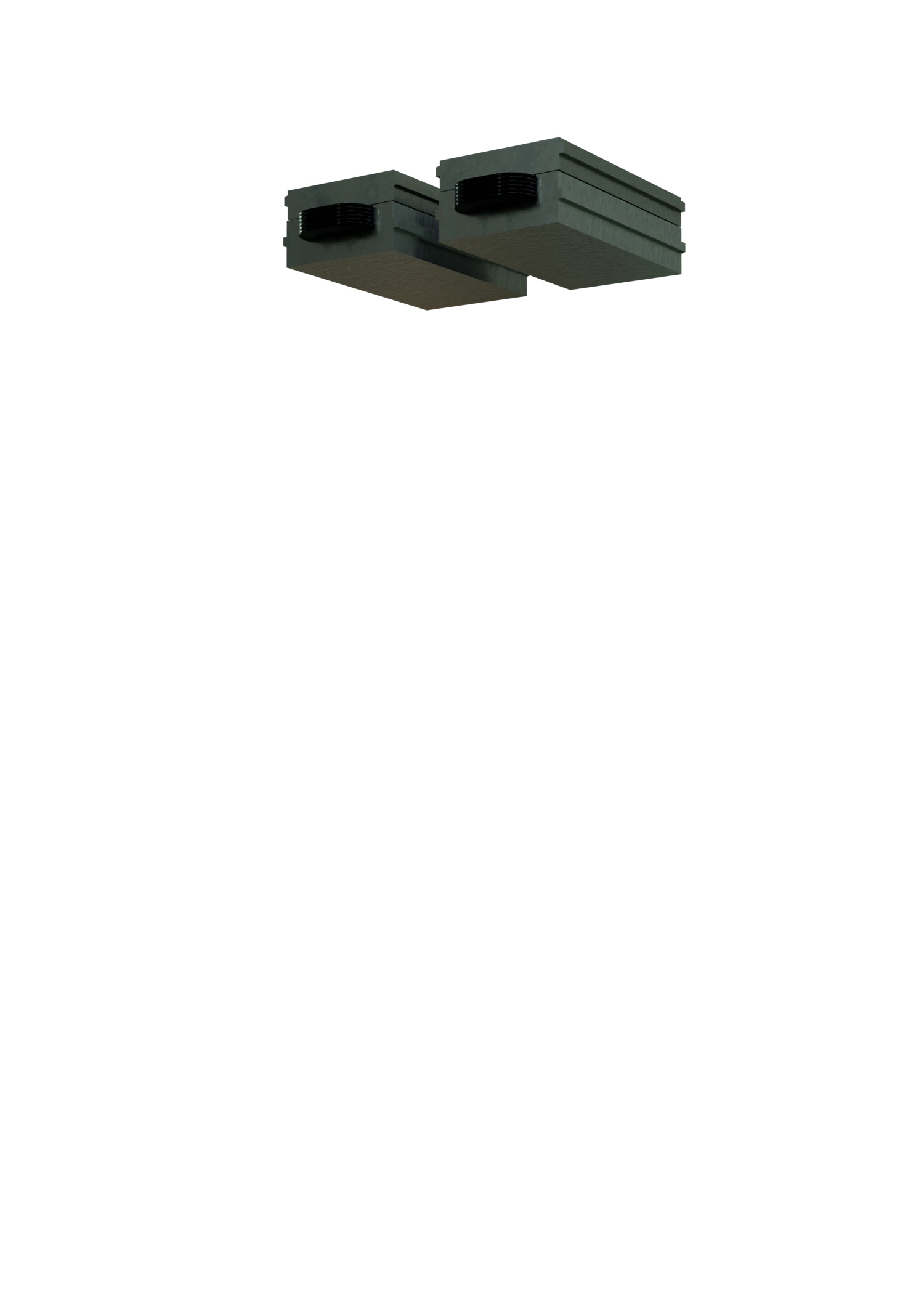
The motor secondary parts travel with the ram. Above them, the magnetic armatures face the fixed electromagnets. Together, these passive counterparts let the moving assembly receive both the controlled linear stroke and the timed force pulse.
Motor secondary parts · magnetic armatures
07 / 08 Reassembly
Putting it all together…
08 / 08 The complete system
Everything
in place.
The press can run at approximately 500 strokes per minute with a 50 mm stroke, or 3,000 strokes per minute with a 2 mm stroke. At the shorter stroke, each cycle lasts 20 ms.
At 3,000 strokes/min, magnetic force must be built ahead of the working window. Process suitability has been validated experimentally.